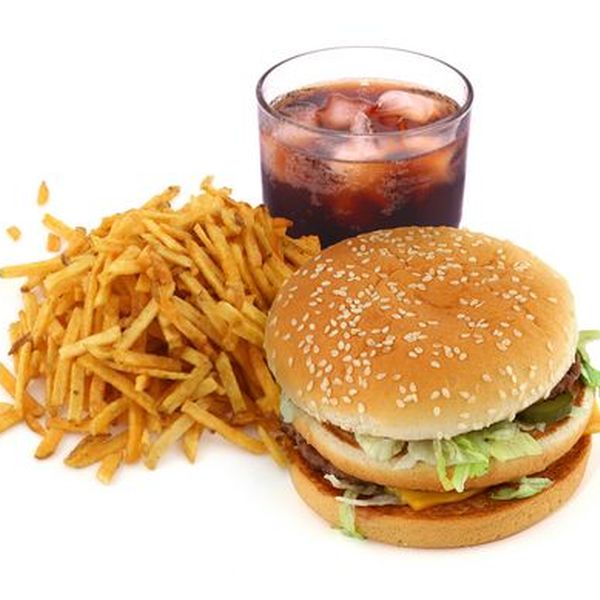
Ever-Present Fast Food Commercials
One of the most efficient ways to increase profit is through advertisement. Fast food companies can spend an immense amount of money on advertising and especially on youth-oriented advertisements. Even though fast food chains spend as much as $3 billion on television advertising, spending on those directed to children such as toys and playgrounds exceed the cost of such conventional advertisement (Schlosser 47). Approximately, they spent over $1 billion on media advertising to children, $4.5 billion on youth-targeted promotions, $2 billion on public relation and roughly $3 billion on packaging especially designed for children (Story and French).
As a result, children aged from 2-5 viewed advertisements and teens viewed 16 on average per day in 2011 (Powell 455). That is how the Golden Arches of McDonald’s become more recognizable than the Holy Cross (Schlosser 4). With such dedication in food advertisement, there is hardly any child that gets away from it. The Fast Food Industry has successfully overtaken the children’s minds from many other important aspects of their lives, one of those being health.
The Effects of Fast Food on Health
For every person, including children, health is one of the most important parts of life. However, eating fast food can lead to many different health problems. Fast food is one of the leading causes of obesity. Since the 1970s, the rate of obesity among American children has doubled (Schlosser 240). In the United States, 17% of all American children and adolescents are now obese (Kluge). To children, those taste-engineered fast foods are nearly irresistible. Children like eating what tastes good rather than foods that are healthy but are not as tasty. They will keep eating more and more fast food until they become obese. Not only that, obesity is directly connected to many diseases such as diabetes, high blood pressure, and cancers such as colon cancer, and stomach cancer, breast cancer, etc. (Schlosser 242). According to Eric Schlosser, the author of Fast Food Nation, “Severely obese American children, aged six to ten, are now dying from heart attacks caused by their weight” (242). Also, lurking in those fast foods can be dangerous bacteria that potentially harm the children’s health and sometimes it can even be fatal.
For example, Alex, the six-year-old son of Nancy Donley, the president of a food safety organization Safe Tables Our Priority, was infected with E. coli 0157: H7 after eating a contaminated hamburger in July of 1993. The boy became ill on Tuesday night and was dead by Sunday afternoon (Schlosser 200). The fast food industry may bring much delicious and convenient food to the public, but for children, it also brings many health issues that affect them not only now but also in the future. In some cases, it takes their lives away.
Children do not also see or understand other future dangers of the fast food industry. Children will become teenagers one day, and many teens work in the fast food industry. Many times, we have heard the phrase: “Fast food jobs aren’t ‘real jobs’. They’re for teenagers who need extra cash” (Cohn). In fact, teens make up about two-thirds of the nation’s fast food employment (Schlosser 68). Since many teenagers nowadays are still living at home with their parents, they can work low-wage jobs, and the fast food industry always provides them those jobs.
According to Schlosser, teenagers “open the fast food outlets in the morning, close them at night, and keep them going at all hours in between” (68). With such a long period of work time, there is a high chance that accidents will happen. The National Institute for Occupational Safety and Health estimated about 44,800 injuries occurred to teenage employees in fast food restaurants (Blosser). Sometimes, those injuries could result in permanent body defects like reduced eyesight, burn marks on skins, or the beauty of the teen can be ruined. For example, a teenage worker can get cut from working with knives, or get burn when frying food in grease. Those kinds of injuries will leave marks on the teen’s body or even more dangerous, make them handicapped. Working in fast food restaurants will increase the risk of getting injured, and injuries can leave permanent marks on teens’ body which can affect their capabilities in the future.
Not only can students face many dangerous situations working in restaurants, but the academic success of teenage workers is also reduced. After hours of working, teenagers come home exhausted and neglect their homework. The day after, they go to school without any preparation and have no idea about what they have learned. Youth who work more than 20 hours per week during the school year do report fewer hours of homework and lower test scores than youth who do not work (Staff and Mortimer 56). Furthermore, it is very hard for teenage workers to participate in after school curricular activities or sports because of their work schedules. Such conditions reduce students’ academic performance.
Schools Supporting Fast Food
Also relating to academia, many schools have turned to “the privatization of the school lunch program as a means to lower unit costs and increase scale” (Aspray et al. 64). Therefore, many schools, especially those facing budget woes, are endorsing fast food as their students’ primary food supply. This causes an increase in the appearance of fast food in school environments. With easier access to fast food, more students become more obese and participate in fewer outdoor activities. Also, fast food restaurants can be a source of distraction for students while in class. During class time, instead of paying attention to the teacher or the lesson, students think about which restaurant to go for lunch or what are they going to eat after class.
Also, many fast food restaurants sell snacks and beverages. Moreover, to attract students, fast food restaurants sometimes give out toys, most of which can be brought into classrooms, distracting students without instructors’ noticing. Therefore, they can reduce the productivity of students during class. A study led by Kelly M. Putell, a professor at Ohio State University, founds that children “who reported daily fast food consumption experienced the slowest growth in their academic achievement” and they are “not receiving enough of these [specific] nutrients to develop optimally” (872-873). With so many distractions and so little nutrients, it is very hard for students to maintain their academic performance at their best. Eating fast food will drag their GPAs down which affects the degrees they can get, and damage their future’s careers.
Fast Food Instead of Family Lunches
With the rise of so much accessible fast food and fast food advertising expenditure, many people start eating out rather than dining in with family. More and more children are attracted to fast food restaurants and refuse to eat at home. In fact, every day, over one third of American children and adolescents consume fast food (Vikraman et al.). The bonds between family members can fade if they’re not strengthened by homey family dinners. Moreover, teenagers’ cooking skills are also degraded because they are no longer needed. There will always be fast food restaurants somewhere, ready to provide foods. That also leads to the decline of home-cooked American traditional dishes. Furthermore, nutritional experts have “identified the lack of home cooking as one of the factors contributing to the ongoing obesity crisis, including childhood obesity” (‘Too Busy, Too Lazy, Too Tired to Cook’). The fast food industry is destroying the relationships between American family members, destroying the food that is a part of the American culture and, again, hurting children’s health.
It costs teenagers a lot if they cannot cook and have to eat at fast food restaurants. From the financial aspect, eating fast food is expensive. For example, if a student goes to school without bringing food from home or eats at school, there is a high chance that he or she will end up eating in one of those fast food restaurants and spending $5 on a meal. With the routine of two meals per day and five school days per week, that adds up to $50 per week or about $200 a month. That same amount of money could have been used to buy school supplies such as books or equipment. It can also be used to buy ingredients to learn how to cook and eat healthy at home with family or simply saved up to spend on other aspects of life. But instead, it is spent on one of the main contributors to obesity and a source of distraction in school. For families that are not financially secured or families with many children, that could be devastating.
The Need for Restricting Children from Fast Food
Although fast food has long been a part of American society, it is important to keep young generations as far away from fast food as possible. Fast food is slowly but surely devastating children’s health. Teenage employment by fast food companies is putting many teenagers in dangerous positions. Fast food creates many factors that drag their academic performances down. Fast food is also driving children away and weakening the bond between them and their families. Those factors combined can destroy children’s future and destroy the future of an entire nation as a whole.